Project Overview & Key Findings
(For a more in-depth understanding of the project’s findings, see the Technical Report.)
The Value of Salt Marsh
Salt marsh is a highly valuable and essential natural resource that benefits communities, coastlines, and economies through improved water quality, floodwater storage, and marine habitat.
Salt Marshes at Risk
Salt marshes are at risk from coastal development, climate change, and increasingly intense coastal storms. Due to their high value, it is vital that these ecosystems are protected and restored to mitigate the impact of these threats.
One Possible Solution
While there are ways to mitigate the threats facing salt marsh (such as thin layer placement, removing invasive species, replacing seawalls with living shorelines, and allowing for inland migration), these options can be costly, and an inability to access funding when it is needed can limit if and when this resource is protected and restored. Insurance is one possible pathway to facilitate the protection and restoration of salt marshes by creating a funding stream that can support mitigation measures long-term.
Project Goal
The goal of this study was to explore the value of salt marshes in Georgia for flood risk reduction and determine whether insurance might be a feasible mechanism for protecting and restoring these ecosystems.
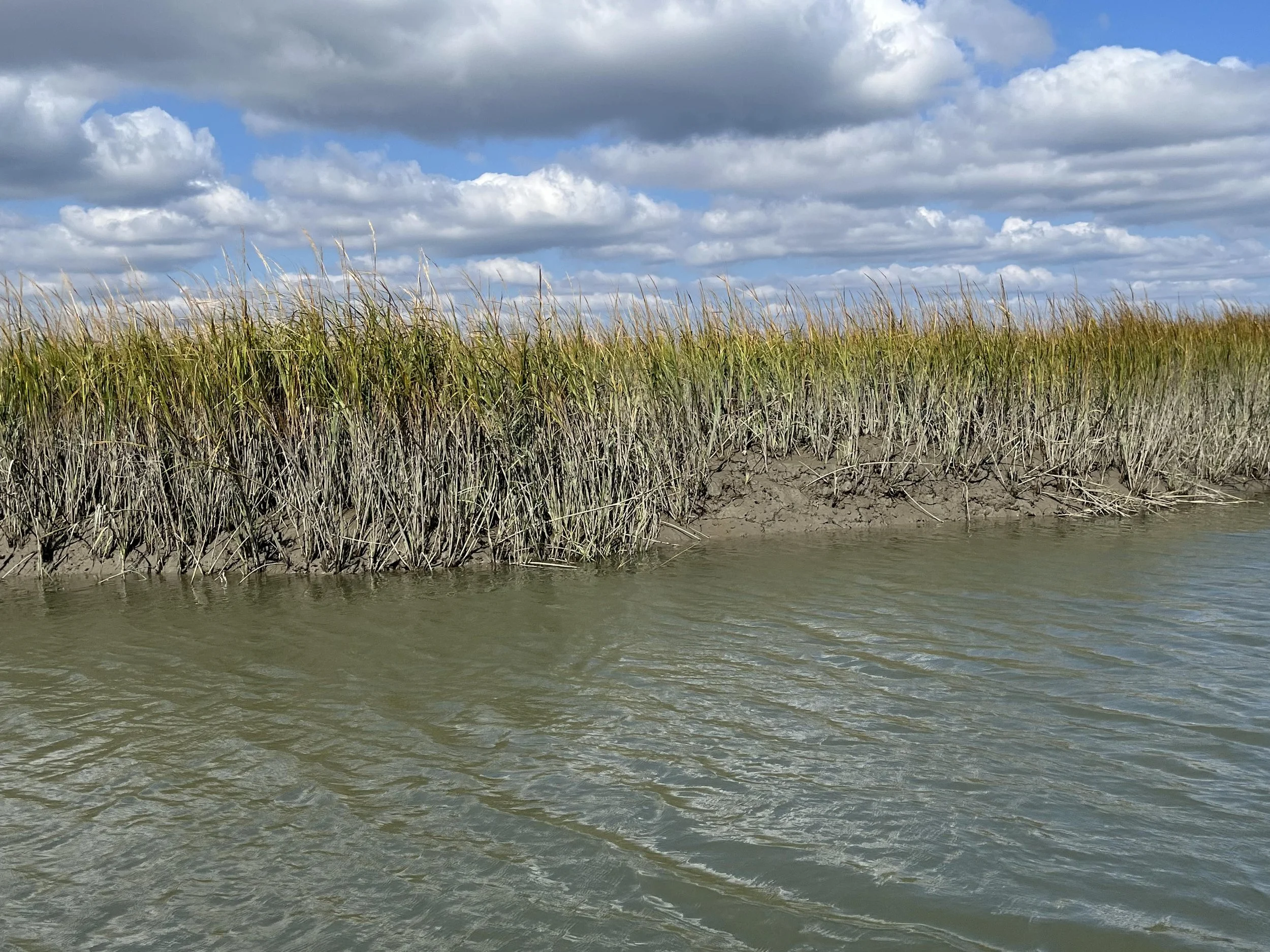
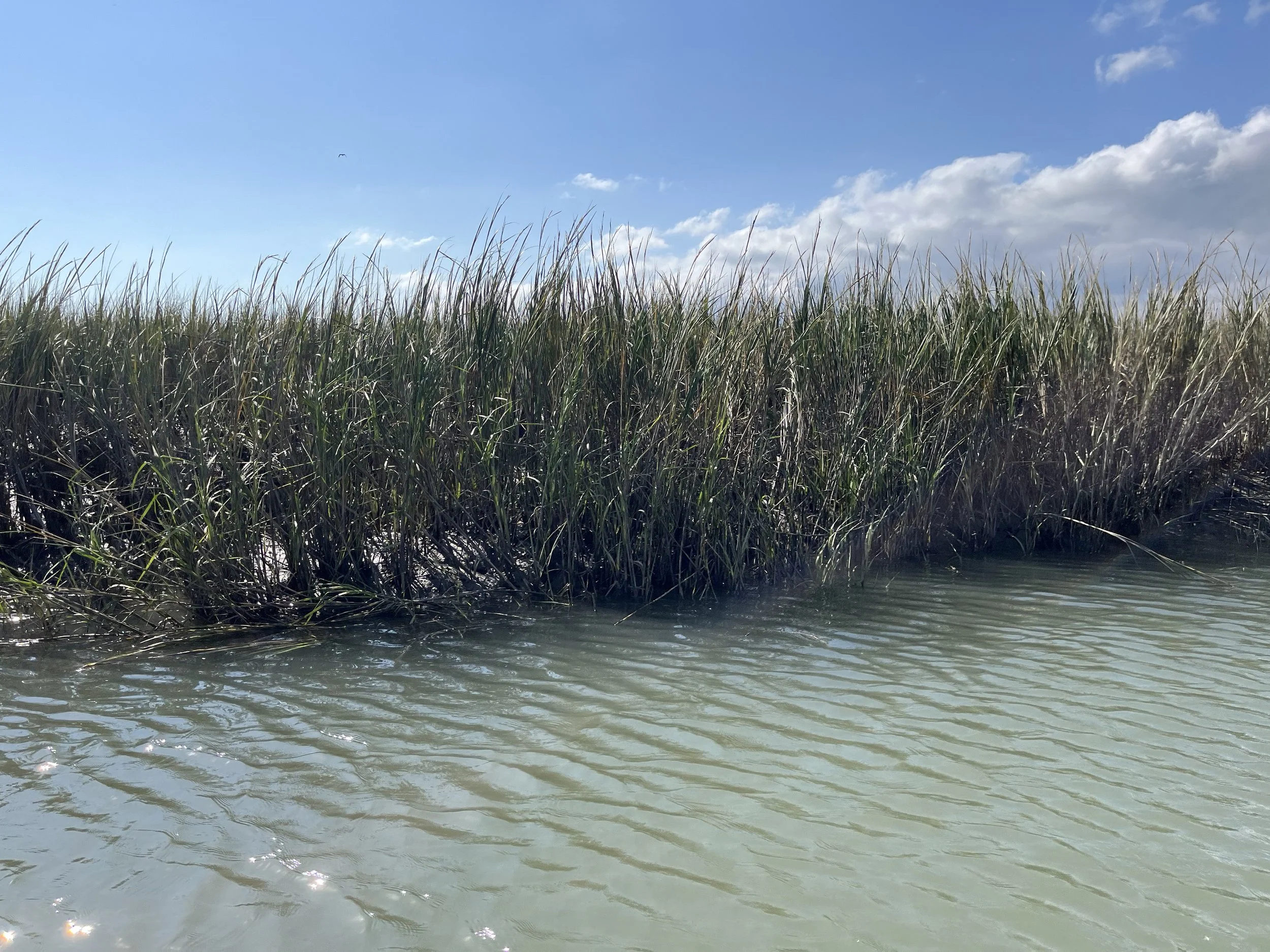
Photo by SoberGlass Photography.
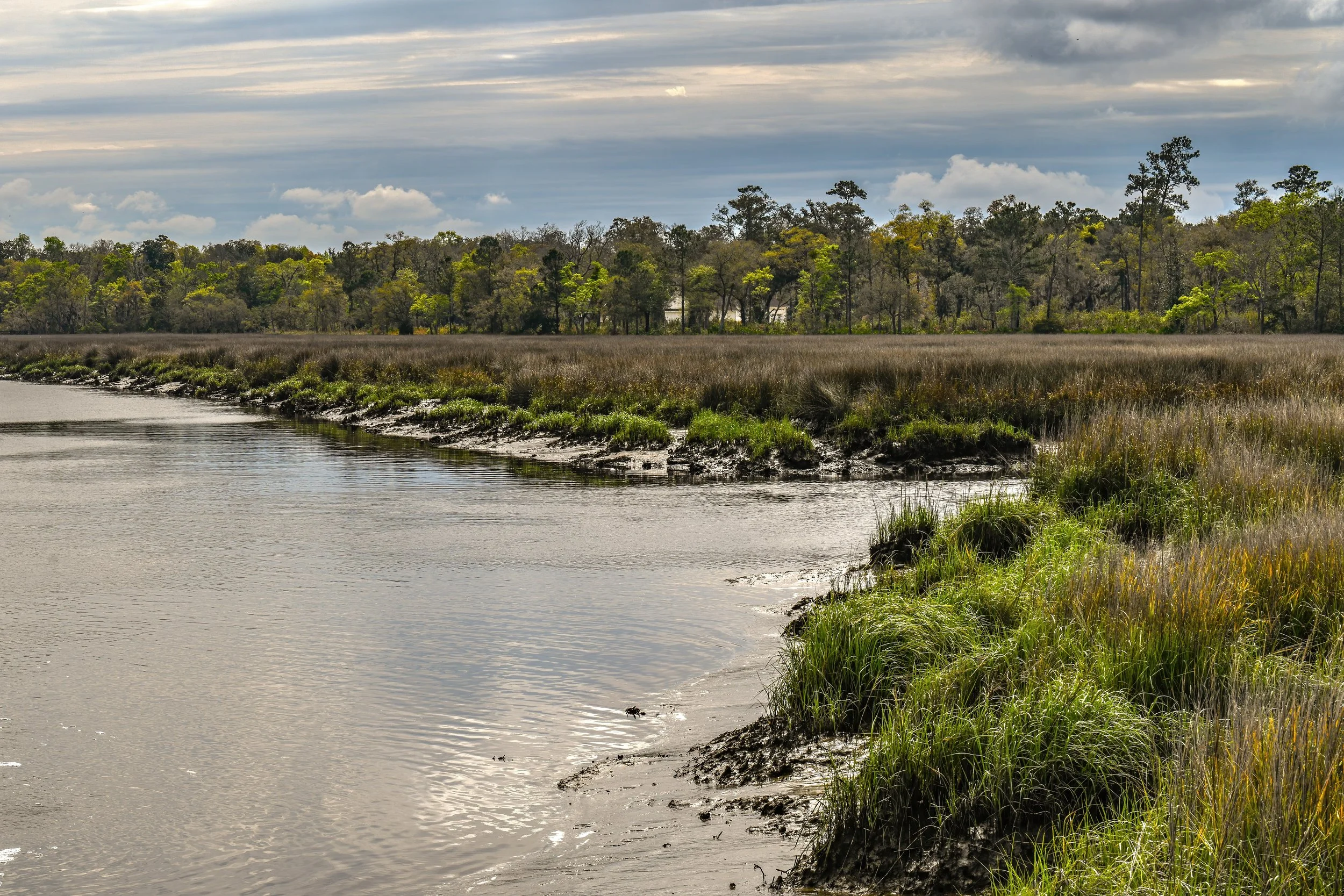
Photo by SoberGlass Photography.
Understanding the Value of Salt Marsh for Flood Risk Reduction
To understand the value of salt marshes for flood risk reduction, a preliminary risk reduction model was developed for the Georgia coast by modeling storm surge resulting from three simulated 1% AEP flood events. This model was designed to indicate where the presence of salt marsh affects the water level (or flood depth) during coastal storms. A socio-economic analysis was then conducted using the same three flood events to provide an initial indication of who benefits from the presence of salt marsh. The results of these analyses told us that:
In general, the presence of salt marsh reduced overall water levels, decreasing flooding in many areas. However, marsh vegetation increased water levels in some regions, intensifying flooding. This is because storm surge can inundate the marsh with higher-than-normal water levels; as a result, the marsh is overwhelmed to such an extent that its capacity to buffer against flooding is reduced.
The financial benefits of salt marsh are highly location-specific, suggesting that marshland alone might not be sufficient to mitigate severe property damage caused by high inundation levels. In the study area, communities with higher poverty rates generally received lower or no benefits from salt marshes. White populations tend to reside in the higher property value areas along the coast; as a result, they are more negatively affected by coastal storm-induced flooding than black populations, but they also see more of the financial benefits from the presence of salt marsh.
The presence of salt marsh can range from costing homeowners to saving/protecting homes by several thousand dollars. For communities, the value of salt marsh for flood protection can range in millions of dollars.
After confirming that salt marsh can offer flood reduction benefits resulting in cost savings to property owners along the Georgia coast, the next step was to determine whether insurance is a viable option to pay for the protection and restoration of salt marsh.
Insurance: Is it Feasible for Salt Marsh?
This study assessed two types of insurance: natural asset insurance resilience insurance.
Natural asset insurance is designed to provide payouts that are used to repair ecosystems after they are damaged by an insurable event (such as a hurricane). These payouts are used to speed up the marsh’s recovery and maintain or enhance the benefits that the ecosystem already provides.
Resilience insurance is designed as an incentive to restore degraded marsh in advance of a damaging event. By making an up-front investment in a marsh restoration project, the risk of damage to the marsh and surrounding infrastructure would be diminished, reducing the need for future repairs.
This study considered three insurance structures as possible mediums for executing natural marsh insurance and resilience insurance: parametric, indemnity, and hybrid (i.e., an indemnity-parametric model). (For a deeper dive into each type of insurance structure, see Box 1 in the Technical Report.)
To explore the potential application of natural asset insurance and resilience insurance, the research team conducted semi-structured interviews with insurance representatives and natural resource managers. These interviews revealed that:
Natural asset insurance and resilience insurance are “outside of the box” thinking, but they both appear to be feasible insurance approaches for salt marsh that would reduce risk to various types of policyholders and other marsh beneficiaries.
Whether either type of insurance is implemented is highly dependent on the type of insurance structure chosen as well as the market for these options.
While many questions remain around the creation and implementation of salt marsh insurance, the creation of these policies will be strengthened once champions are identified who push for implementation.
While the interviews reported that salt marshes may be an insurable asset, challenges still face both approaches, which could limit the ease of implementation. Some of the challenges facing both approaches include:
The need to identify policyholders who value the salt marsh for the services it provides and are keen to restore or repair the salt marsh to maintain or enhance those services.
The need to ensure that potential policyholders are interested in transferring the risk and not bearing the cost of salt marsh repair (as in natural asset insurance) or in proactively investing in nature-based risk reduction in exchange for benefits such as, but potentially not limited to, premium savings (as in resilience insurance).
The need to identify a dependable source of financing to support the yearly premium expenses.
However, unique challenges also face both approaches. (For a detailed list, see Section 7 of the Technical Report.) While the challenges facing resilience insurance are more substantial than those facing natural asset insurance, the challenges to both approaches may be surmountable.
What This Means
This study found that (1) salt marshes provide flood reduction benefits, producing real cost savings for individual property owners and coastal communities, and (2) salt marshes may be an insurable asset. Insurance has been successfully applied toward other natural resources (including coral reefs and mangroves), paving the way for the establishment of salt marsh insurance. However, because insurance laws and regulations are governed state by state (rather than at the federal level), additional assessment is required to confirm it is possible in Georgia (as well as in other states). Natural asset insurance currently appears better positioned to move toward implementation, but additional research and modeling is needed to advance any sort of risk financing program for salt marsh.
Next Steps
For salt marsh insurance of either approach to be established in Georgia and beyond, more research, modeling, and conversations are needed to address the remaining questions and challenges.
Further efforts should focus on:
Identifying the storm types and characteristics for which salt marshes provide the greatest protective benefits.
Understanding the conditions under which storms may degrade marsh ecosystems and reduce their protective capacity.
Assessing the natural resilience of salt marsh ecosystems and their ability to recover without human intervention (which can be useful to inform potential financing mechanisms).
Identifying cost-effective locations for maintenance and restoration to maximize benefits to communities, businesses, and infrastructure.
Clarifying which entities are legally eligible to purchase salt marsh insurance and engage stakeholders to identify interested parties willing to support program development and implementation.
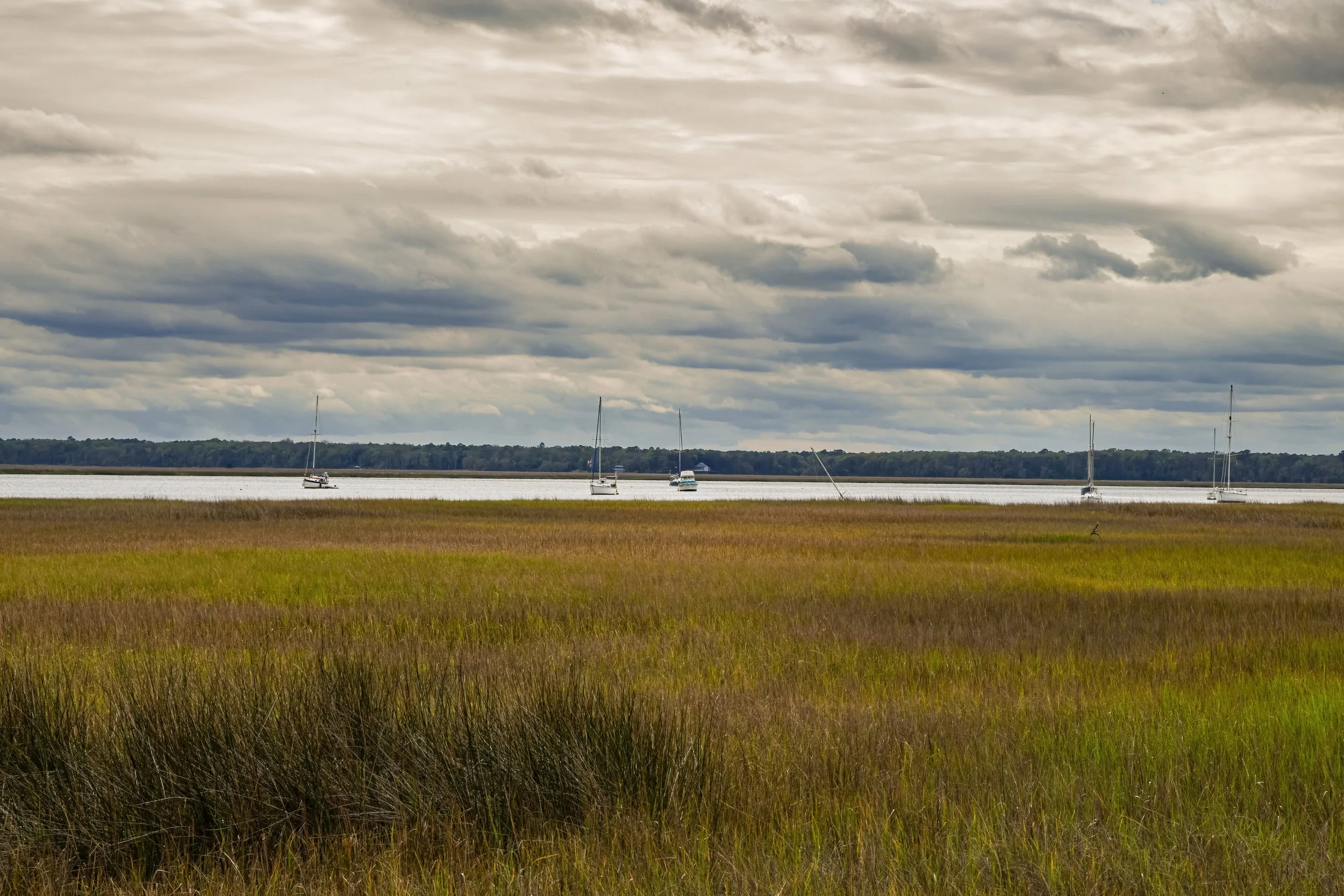
Photo by SoberGlass Photography.